When does the clock stop in College Football?
The Clock stops in college football after a touchdown, an incomplete ruling of a forward pass, the team is granted a timeout or the ball becomes illegal, and so on.
Other conditions for the stoppage are:
- The success of a kick return
- End of legal kick down
- End of a period
- The rule of mandatory equipment is violated
- Whenever team A commits a foul titles 'delay-of-game' while being in the scrimmage-kick formation
- For the completion of the penalty
- During the injury timeout
- When an unintended whistle sound is heard
- Possession of a live ball by an official
- On coaches request of conference or instant-replay challenge
- Declaration of discretionary timeout by referee
- When a player's helmet comes off completely
- During a deadball foul
In all of the above terms, the time will only start after an official calls the start of the play, or if the next play is to begin with a snap, the clock will start on the snap.
College Football is widely known for having long, time-consuming games and consists of several plays that will make audiences stand in the stadium for a long time.
One of the primary reasons for such long run times of NCAA matches is plenty of clock stoppage rules and conditions that lengthen the duration.
The run duration is over three hours on average and sometimes nearly four hours, without overtime. Well, we cannot blame the clock rules alone as other factors such as commercial breaks, TV Timeouts, etc. are significant contributors.
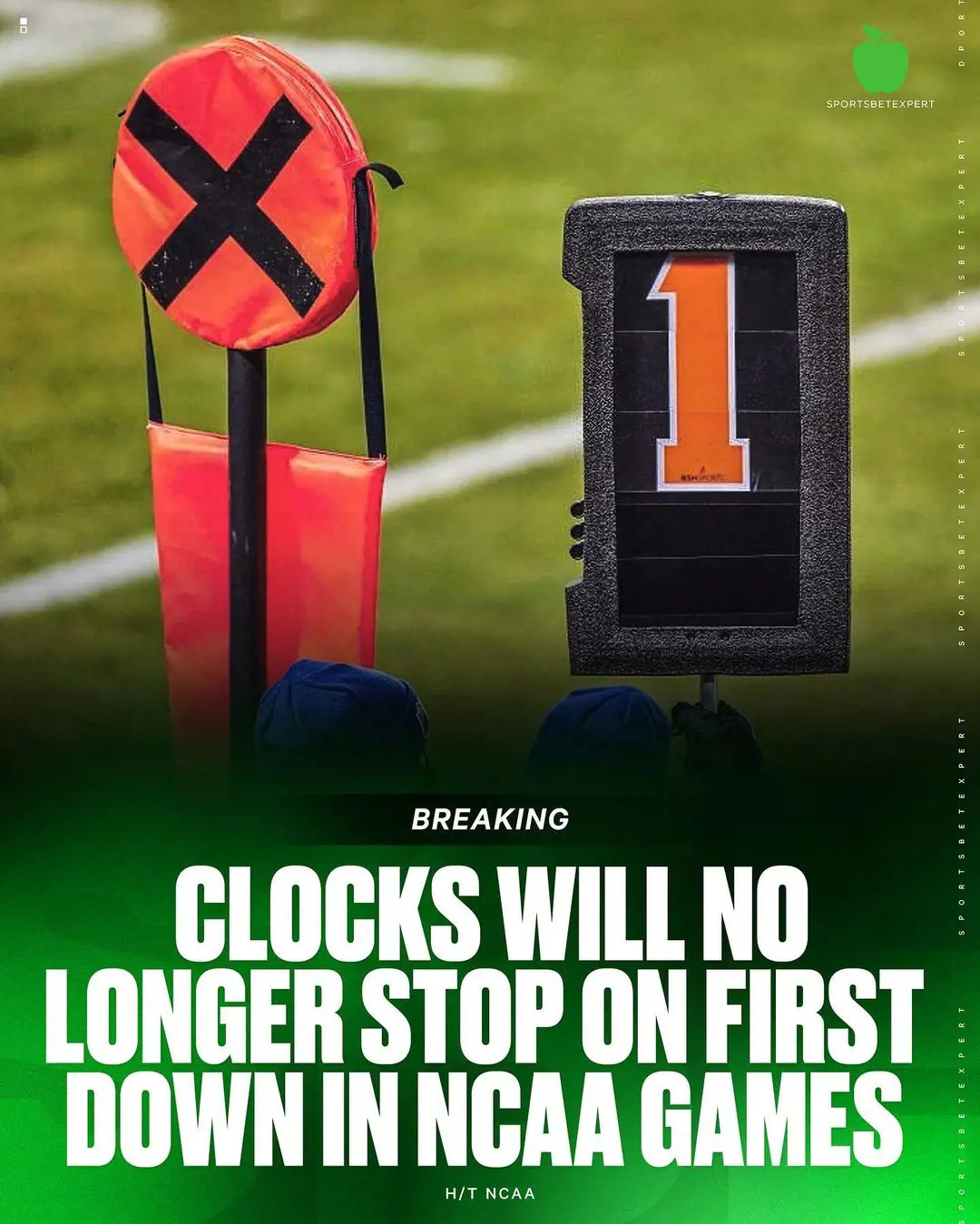
New changes have been made regarding the running clock recently, which is expected to cut the length of college football games to some extent, and the fans wouldn't have to wait at least up to three hours to get their winner.