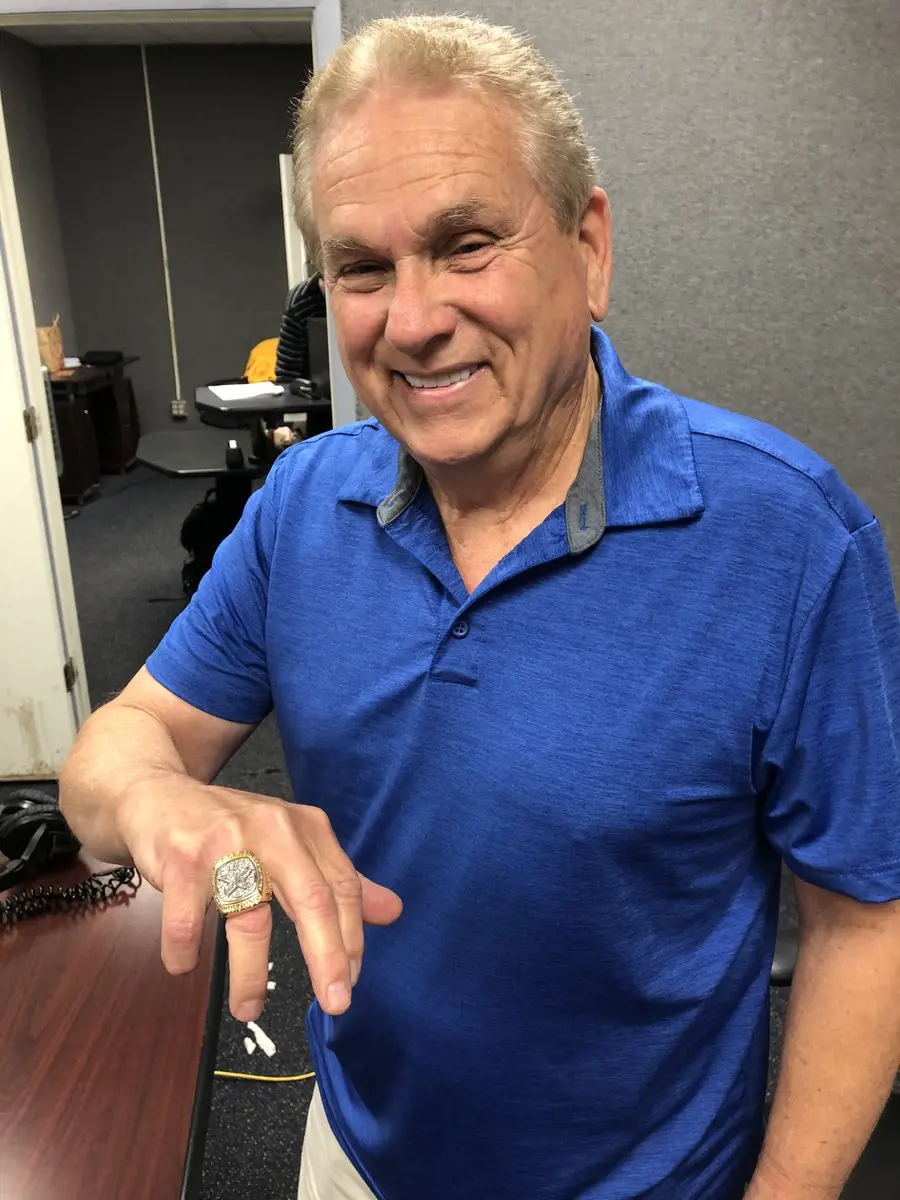
NFL Teams

Dallas Cowboys 9 Head Coaches: Franchise Of Legacy

By Ayush Khadka / 14 December 2023 07:06 AM

( Source : twitter )

The Dallas Cowboys franchise boasts a rich history connected with legendary coaches who shaped the team's identity. Throughout their existence, the Cowboys have witnessed 9 head coaches, each one leaving an incredible mark on the team's legacy.

Some of these coaches have led the Cowboys to Super Bowl victories while others have bound them to playoffs. Each coach, with their unique style and leadership, has assisted in the team's enduring success and passionate fan base.

Considered the most popular NFL team today, the Dallas Cowboys records for having the most coaches with 100+ wins in NFL history, i.e. 5. This success is certainly a testament to the coaching dynasty.

Moreover, they also have the longest consecutive coaching tenure in NFL history (29 years with the legend Tom Landry). It's evident that loyalty runs deep in Dallas.

Let us look at all the nine head coaches who have left a powerful legacy in the Cowboys' history.

1. Tom Landry (1960-1988)
( Source : twitter )

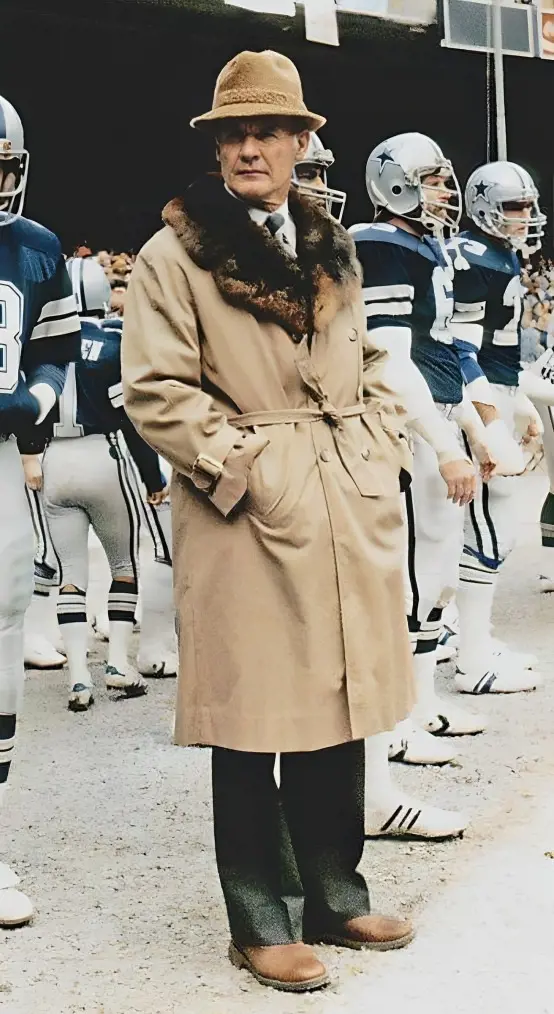
Tom Landry is more than just a name in Dallas Cowboys history; he's an icon. He served as the franchise's head coach from 1960 to 1988, building a dynasty that cemented the Cowboys' place as one of the League's most legendary franchises.

Under Landry's leadership, the Cowboys appeared in the Super Bowl five times and won in 1971 and 1977. These victories solidified his legacy as a Super Bowl-caliber coach and refined the Cowboys' reputation as an NFL powerhouse.

Landry had arrived in Dallas with a vision: to establish a well-oiled disciplined, machine. His "Doomsday Defense" strategy wreaked havoc on the opposing offenses.

This defensive scheme, combined with players like Bob Lilly, Chuck Howley, and Mel Renfro laid the foundation for future success.

His iconic fedora was a sight to behold, and his signature sideline presence became a symbol of unwavering commitment to the game.
2. Jimmy Johnson (1989–1993)

( Source : twitter )

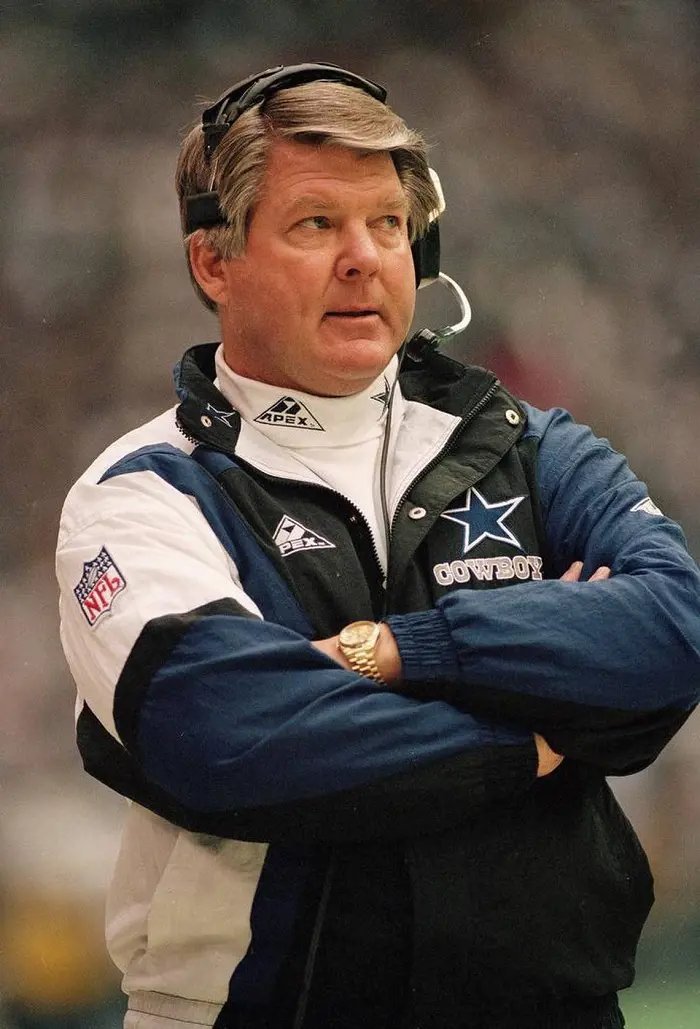
Jimmy Johnson's impact on the Dallas Cowboys cannot be overstated. Inheriting a 1-15 team in 1989, Johnson architected a cultural overhaul, utilizing a relentless work ethic and strict discipline.

His early struggles were met with criticism, but Johnson remained committed to his vision. He drafted future Hall of Famers like QB Troy Aikman and RB Emmitt Smith.

Johnson's gamble paid off in 1991 as the team roared back to the playoffs, and in 1992, Jimmy led them to Super Bowl XXVII victory, breaking a 30-year title drought. The Cowboys repeated the feat the following year, cementing Johnson's legacy as a Lombardi Trophy champion.

Though rifts with owner Jerry Jones led to his departure in 1994, Jimmy's imprint remains powerful on the Cowboys' DNA. He is considered a Dallas legend, a symbol of the commitment and dedication it takes to build a dynasty.

3. Barry Switzer (1994-1997)

( Source : twitter )

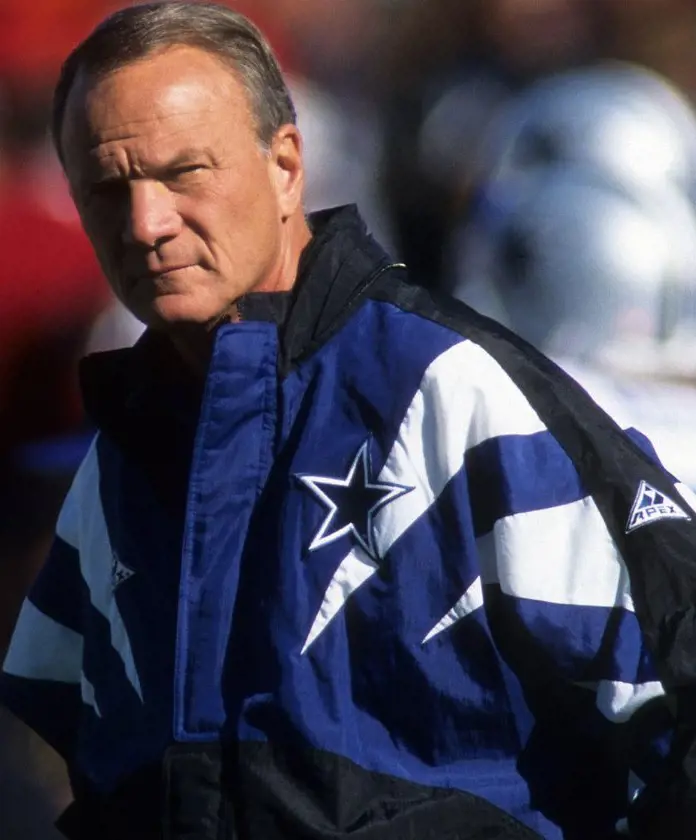
After Jimmy Johnson's departure, Barry Switzer came to the spotlight as a new hire for the head coach position in 1994. Aka "Bootlegger", Barry worked for a shorter time compared to his predecessors but left a legacy at the Dallas Cowboys.

Switzer faced a tough challenge, as he had to navigate the shadow of a legendary predecessor and maintain a dynasty filled with top athletes.

The coach proved successful in this endeavor, as Switzer's first season saw a 12-4 record and a trip to the NFC Championship Game.

But Barry's legacy was fully cemented in 1995. Leading a destructive offense with Troy Aikman, the Cowboys dominated the league and won a resounding 27-17 victory in Super Bowl XXX over the Pittsburgh Steelers.

The Cowboys became "America's Team" under his watch, entertaining the nation with their exciting plays and larger-than-life personalities.

He eventually stepped down in 1997 and left a legacy of one Lombardi Trophy, two NFC Championship appearances, and a 40-24 win-loss record.

4. Chan Gailey (1998–1999)

( Source : twitter )

While overshadowed by the legendary names of Johsnon and Switzer, Chan Gailey's two-year stint as the Dallas Cowboys head coach (1998-1999) deserves a closer look.

Gailey, who inherited a struggling team after Barry Switzer's departure, defied expectations by keeping the Cowboys winning season afloat.

In 1998, Gailey's offensive schemes, focused on utilizing Troy Aikman's arm and Emmitt Smith's rushing prowess, proved effective. He led the Cowboys to a 10-6 record and the NFC East title and silenced any doubters.

Though injuries halted their progress, Gailey's Cowboys reached the NFC Championship Game, an achievement no other Dallas coach has replicated since.

Despite playoff success, Gailey's second year was filled with injuries and controversy. Aikman's loss for five games and Michael Irvin's season-ending spinal cord injury impacted the offense department.

Moreover, Gailey's clash with owner Jerry Jones led to his unexpected firing in 2000.

5. Dave Campo (2000-2002)

( Source : twitter )

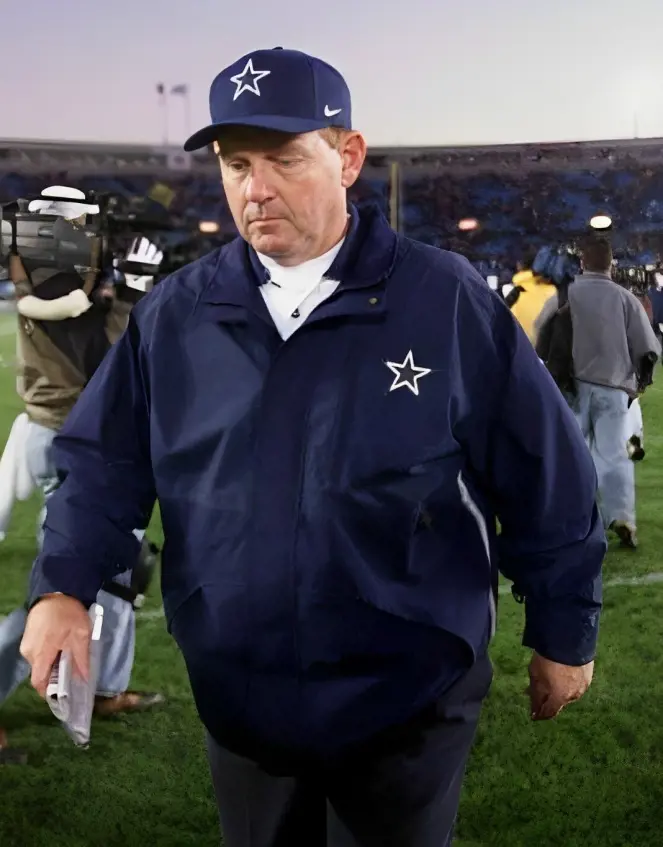
While Dave Campo eventually left the Cowboys with a losing record (15-33), his legacy is more nuanced than simple wins and losses. His tenure as head coach of the Dallas Cowboys (2000-2002) was a rollercoaster of emotions.

Campo's reputation as a defensive strategist preceded him. He built a formidable unit in Dallas and players like Darren Hambrick and Greg Ellis thrived under his guidance. The Cowboys boasted a top-ranked defense in 2000.

However, Campo's defensive mind didn't translate to offensive success. The team struggled to find a consistent QB and offensive identity during his tenure. Troy Aikman's retirement left a huge hole, and the likes of Quincy Carter and Anthony Wright failed to fill it properly.

In his first season, the offense fizzled out, and the team finished 5-11, a dent in their Super Bowl aspirations.

Campo was the first Dallas HC to lose to the Houston Texans in their 2002 inaugural game. He also holds the record for being the only Cowboys coach with a losing record (.313).

6. Bill Parcells (2003-2006)

( Source : twitter )

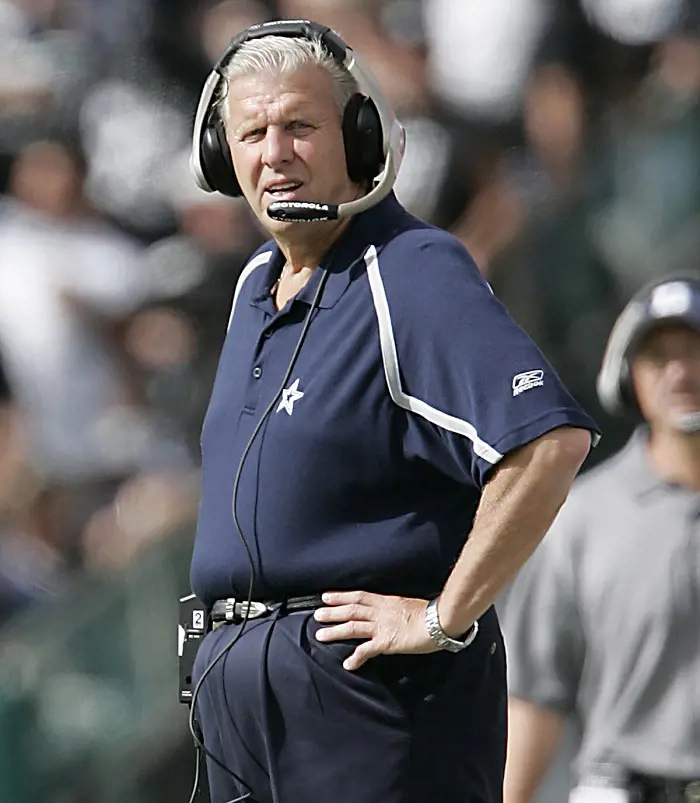
Bill Parcells, aka "Big Tuna," wasn't your typical NFL coach. Gruff and prone to salty language, he was a stark contrast to the often-polished professional football world. Yet, his impact on the Dallas Cowboys during his four-year tenure from 2003-2006 was profound.

Parcells arrived in Dallas when the franchise was in decline. The 1990s Cowboys dynasty had fallen into mediocrity. Parcells, who had two Super Bowls under his belt, revamped the roster. He focused on defense and offensive line play – the "hog molly" philosophy.

He famously stated, "You are what your record says you are," demanding excellence from every player. Parcells recognized and nurtured young talent, most notably QB Tony Romo, who blossomed under his guidance.

He left with a 34-30 win-loss record. It might not be flashy, but it represented a significant turnaround from the years preceding his arrival. He left the Dallas team poised for greatness, a legacy that would pay off in the coming years.

7. Wade Phillips (2007-2010)

( Source : twitter )

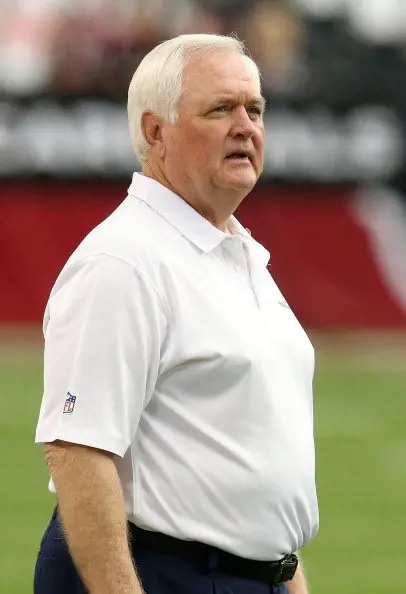
Wade Phillips, the Texan with a booming laugh, had a four-season short tenure with the Dallas Cowboys. His tenure wasn't defined by Super Bowl rings but by a fiery passion for defense and a knack for reviving a franchise in need of a spark.

Phillips' defensive prowess saw the team implement the aggressive 3-4 scheme, transforming the Cowboys' defense into a dominant force. Players like Anthony Spencer and DeMarcus Ware thrived under him, and the "Wade's Wall" nickname became synonymous with the Dallas defense.

Wade guided the Cowboys to three consecutive NFC East division victories, ending the long drought. He is also the last Cowboys coach to gain three consecutive division titles.

While the team fell short of the Super Bowl in each playoff appearance, they entertained the fans with their fighting spirit.

Philips has been present as a coaching staff in many teams throughout his career, journeying 10 different franchises until his retirement.

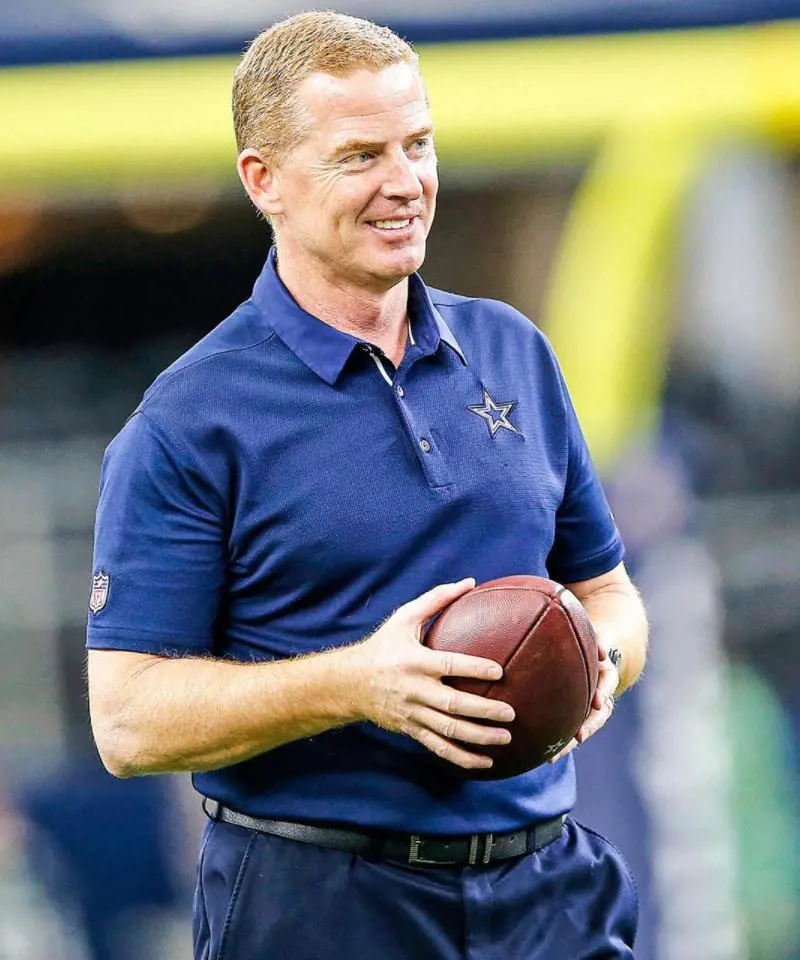
8. Jason Garrett (2010-2019)

( Source : twitter )

Jason Garrett's story as the Dallas Cowboys head coach is a story filled with consistency, respect, and unfulfilled potential. He did not become the Lombardi Trophy-winning coach the Cowboys craved, but he brought stability and competitiveness during a turbulent phase.

Garrett inherited a team that was reeling after Wade Phillips' departure. His offensive mind, honed under Bill Parcells, aided in developing QB Tony Romo into a Pro Bowl player.

Garrett led the Cowboys franchise to three playoff appearances in his first six seasons, an achievement his predecessors struggled to achieve.

While the team never advanced beyond the Divisional Round, Garrett's Cowboys were consistently competitive, earning him the nickname "Coach Clapping" for his vigorous sideline enthusiasm.

He also drafted and developed key footballers like Ezekiel Elliott and Dak Prescott, who now lay the groundwork for the team's present offensive firepower.

After Tom Landry, Garrett is registered to have the second-longest tenure of any Cowboys head coach.

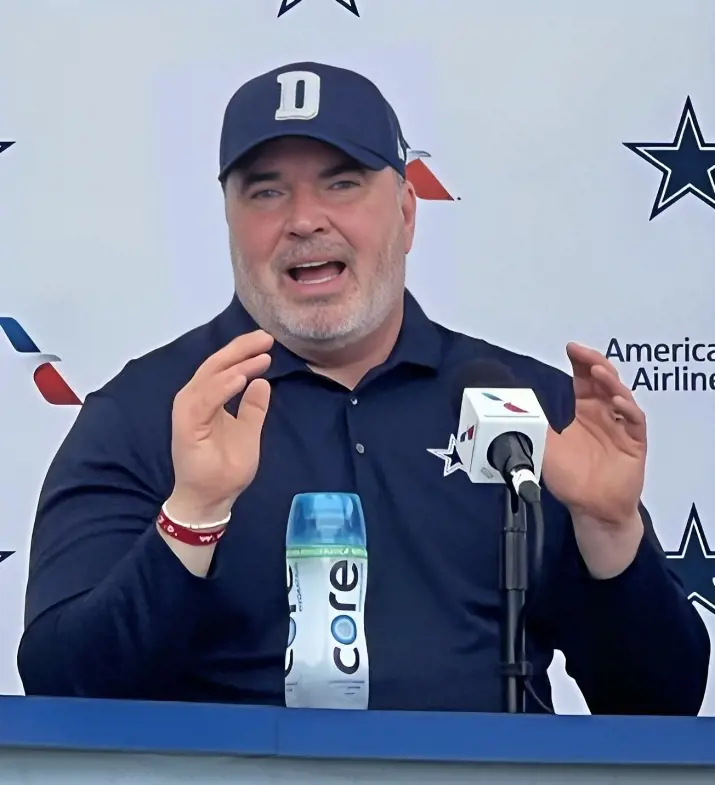
9. Mike McCarthy (2020-present)

( Source : twitter )

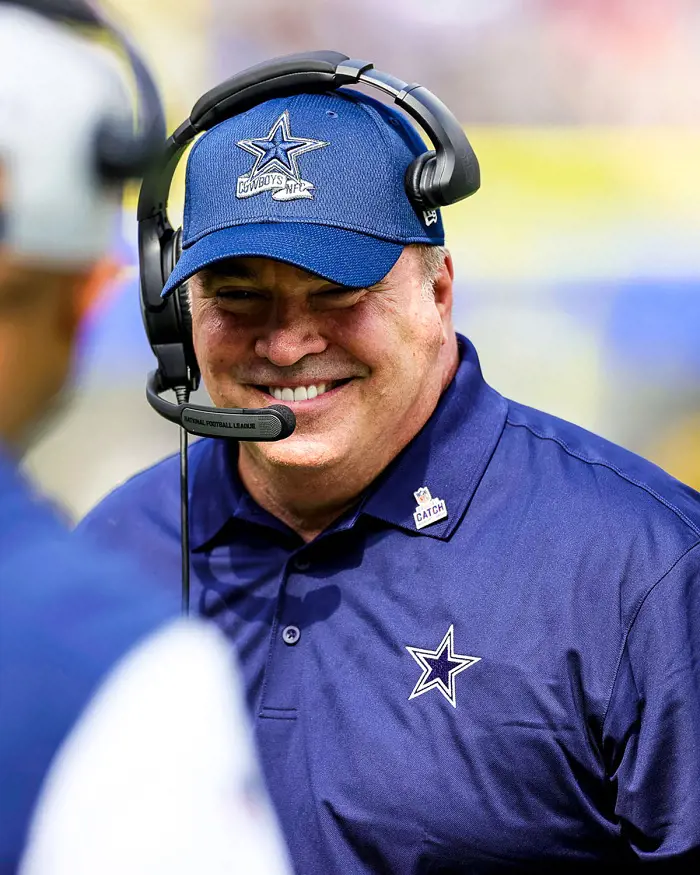
The current head coach of the Dallas Cowboys is Mike McCarthy who has brought a much-needed dose of offensive firepower and hope into the storied franchise.

A Lombardi Trophy-winning coach for the Packers, McCarthy has dedicated his time and efforts to bring his next Super Bowl with the Cowboys. An offensive genius, McCarthy's arrival in 2020 immediately saw revitalization with the addition of QB Dak Prescott, RB Tony Pollard, and WR CeeDee Lamb.

McCarthy has brought winning seasons one after another. However, his impact is not only limited to the regular season. Mike guided the Cowboys back to the playoffs in 2020 and 2021, which ended a three-year drought.

While the team hasn't reached the Super Bowl promise land yet, the progress under McCarthy has been impressive.

In the 2023 season, the Cowboys are already looking to become the No. 1 seed in the NFC with a 10-3 record. Prescott and Lamb have brought offensive mayhem.

Related post of NFL Teams