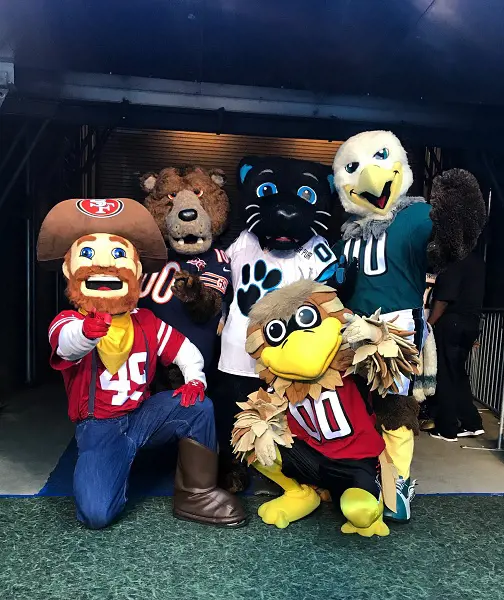
Be it a walking Eagle, a blue buffalo, a nerdy-looking falcon, a yellow jaguar, a cute black panther, or a happy hog, they always entertain the crowd and make the environment lively during a football match.
All NFL mascots are representations of something near and dear to the franchise. They are mostly animal figures representing the franchise team name, the state animal, or some homage to franchise history.
These mascots embody a team's identity, purposely engage the fans, and entertain them with their dance moves, pranks, and other activities on the football field.
However, they are not limited to football fields and football events, they can be seen working all around the year. They attend school events and act as a face for various causes, working for the welfare of the community.
Currently, 28 teams have one or two mascots, while the New York Jets, New York Giants, Los Angeles Chargers, and Green Bay Packers have none.
Let's check out all the giant head-walking animals and symbolic figures that are the source of entertainment, on and off the football field.
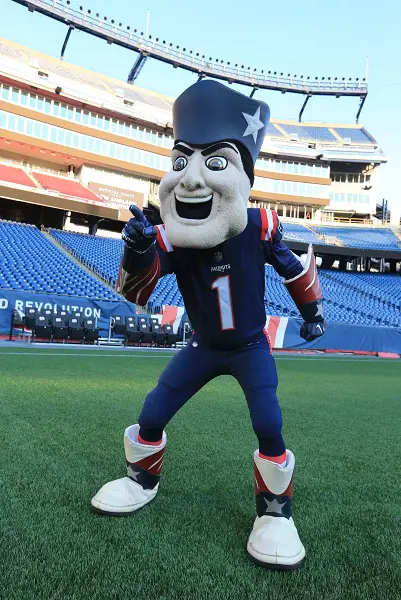
The New England Patriots mascot resembles an American Revolution soldier. It is also the depiction of the vintage logo used by the franchise from 1960 to 1992.
Cartoonist Phil Bissell created the logo in 1960.
Pat Patriot's debut came in the 1995 Pro Bowl. It continued to appear in eleven Super Bowls, the exact number of league champions the Patriots have played in their history.
The tricorne navy hat, a massive jawline, and a big shoe, enough to fit two feet, are its distinctive features.
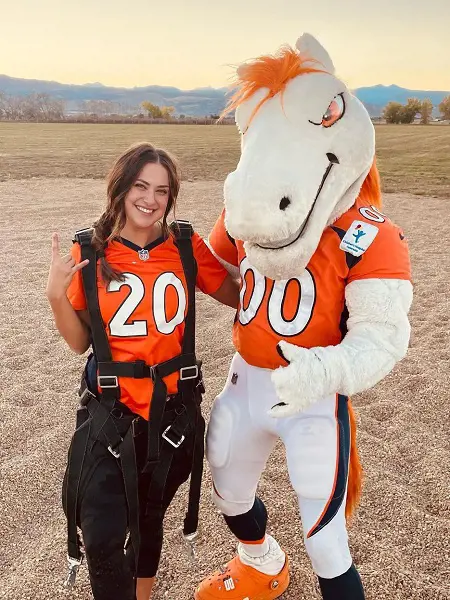
Miles made its first public sighting at the 1995 Pro Bowl. It is a white horse with orange eyes and a small mane and is the official mascot of the Denver Broncos.
According to its backstory, its birth date matches the Broncos' second Super Bowl win (XXXIII), i.e. January 31, 1999.
Likewise, Thunder II is a 1994 Arabian gelding that succeded Thunder Sr. in 2004. It has been trained and ridden by Ann Judge.
The franchise retired the horse in 2014. Despite its official retirement, it appears in a few public events.
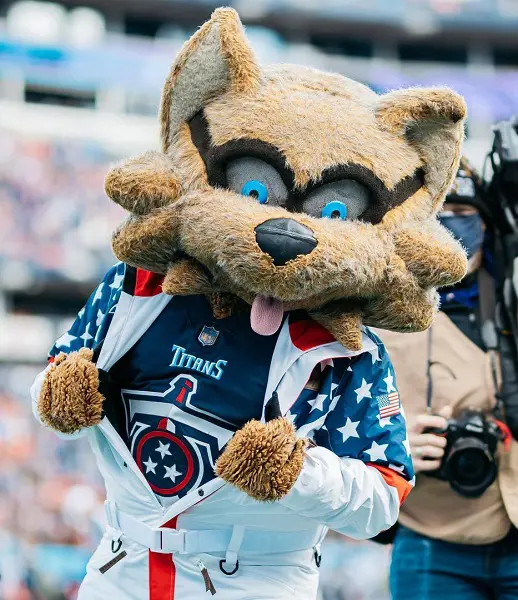
Tennessee Titan's T-Rac is a raccoon, representing the state animal of Tennessee. It first came into existence in 1999 against the Atlanta Falcons.
Initially, Pete Nelson sported the costume for seventeen years, from 1999 to 2016. T-Rac won the Most Awesome Mascot award in 2011, defeating Phoenix Suns' Gorilla.
After Nelson's retirement, Justin Sullivan has been sporting the attire and entertaining the crowds for seven years.
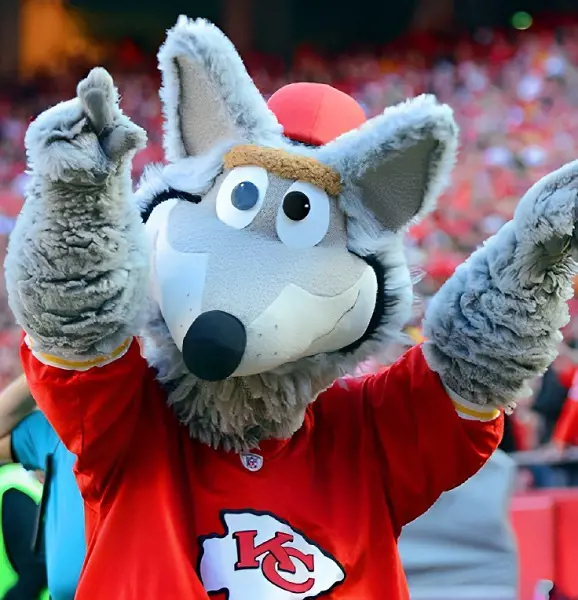
K.C. Wolf is one of the highest-paid mascots in the NFL, earning $65,000 yearly. Since its debut in 1989, Dan Meers has donned the costume for the Kansas City Chiefs.
It is a wolf with a massive hip and a cartoonish face that resembles a rat. The gray wolf usually wears a Chiefs jersey and tropical pants.
Its name is a tribute to the temporary bleacher, where the rowdy fanbase from the time they played at the Municipal Stadium was seated. It was called the 'Wolfpack Club.'
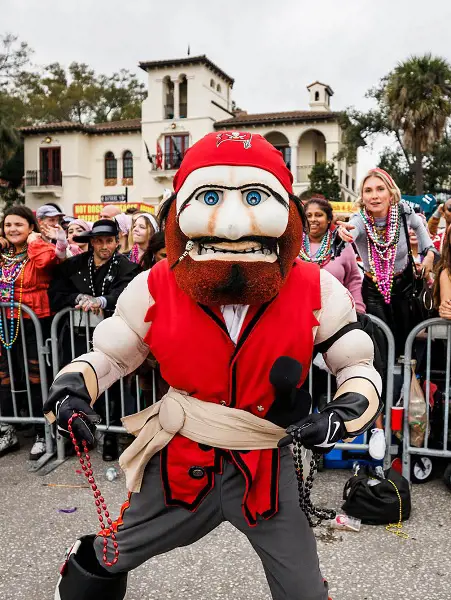
Captain Fear was selected to replace Tampa Bay Buccaneers' Skully, a parrot mascot, in June 2000. Its name was chosen through a tedious voting process.
According to the Buccaneers' official site, Captain Fear survived an intense Caribbean storm and reached the Tampa Bay Shore in a makeshift raft. His broken ship also shored off towards him.
He repaired the ship and docked it in the Buccaneer Cove at the Raymond James Stadium. The bearded pirate has black hair and blue eyes.
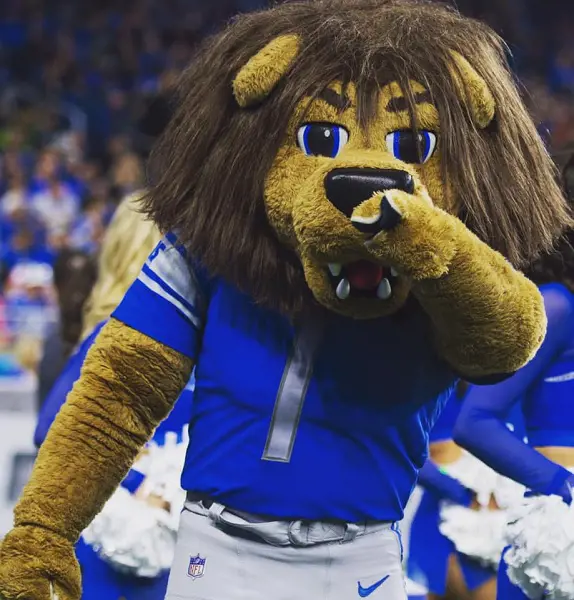
Jeff Melinat dressed as Roary for the Detroit Lions for 24 seasons, from 1982 to 2006. The job changed hands in December 2006 when Mark Klemish was hired to wear the attire.
The Ford Field's lion's birthday falls on the 20th of September. It like the movie The Lion King and someday would like to be the 'King of the Jungle.'
Roary has been the NFL Pro Bowl Mascot three times in 2013, 2017, and 2019.
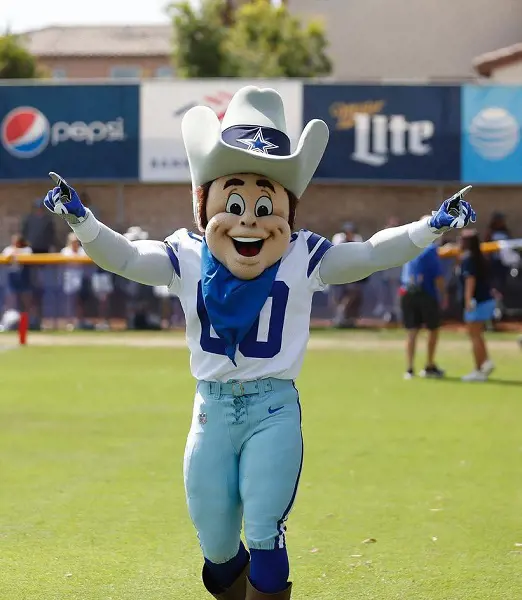
The Dallas Cowboys' mascot usually appears in the Cowboys' uniform and has his signature apparel like the cowboy hat, cowboy boots, and chaps.
Rowdy was created during the 1990s as 'Big D.' It was adopted in 1996 by Dallas and renamed as Rowdy.
As a Cowboys Ambassador, it appears in all home games distributes t-shirts, and encourages the crowd to support the team. It also mocks the opposing team.
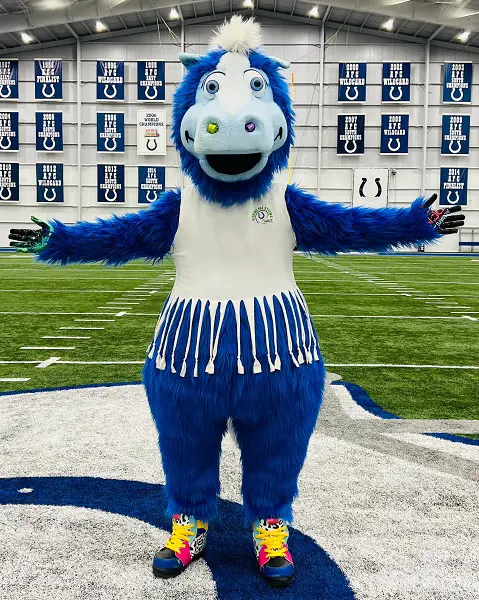
Blue was inducted into the Mascot Hall of Fame in 2020. It is the second NFL mascot in the prestigious list after K. C. Wolf, inducted in 2006.
The Indianapolis Colts introduced the anthropomorphic blue horse on September 17, 2006. Since then it has been invited to two Pro Bowls in 2009 and 2011.
Due to its on-field performance and off-field contribution, Blue received the NFL Mascot of the Year accolade in 2016, 2019, and 2023.
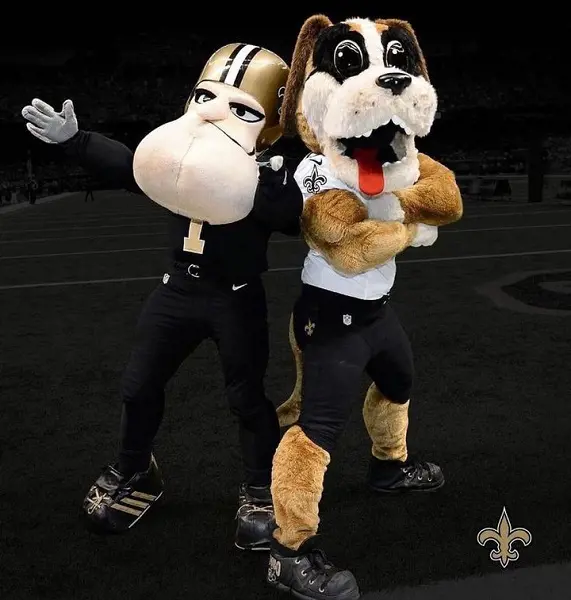
Gumbo wears the number 00 jersey, black shoes, and pants. It resembles a Saint Bernard dog.
The name' Gumbo' was picked to reflect the New Orleans Restaurant Association and the famed Cajun meal. Likewise, the reason for choosing Saint Bernard Dog is because St. Bernard Parish is located at one of the borders of New Orleans.
Likewise, Sir Saint has a massive chin, small eyes, and big feet. He is a depiction of the Sir Saint logo used by the franchise from 1967 to 1984.
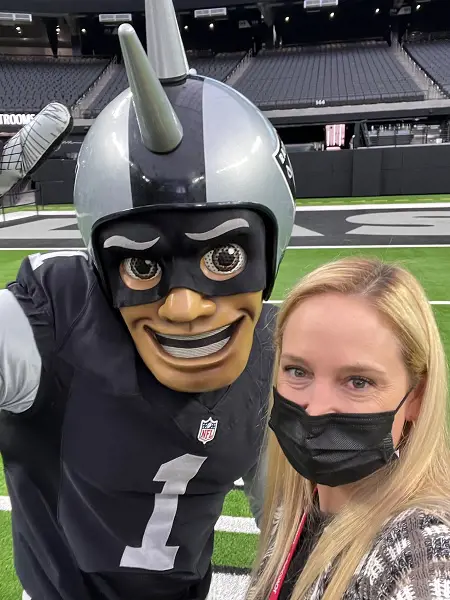
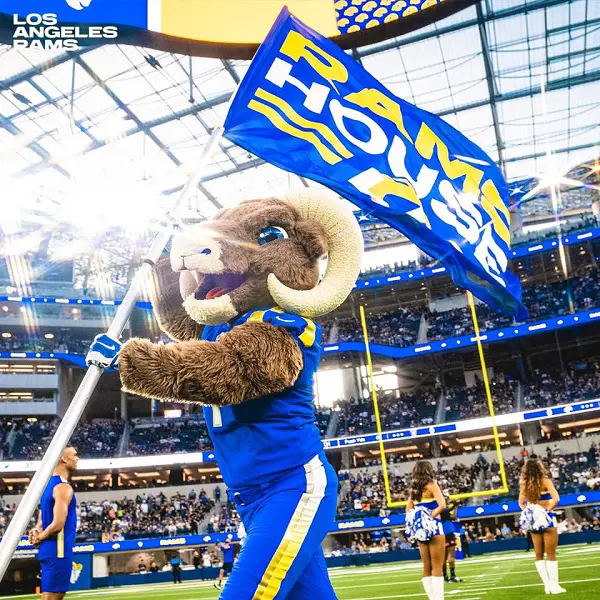
Rampage debuted for the Los Angeles Rams in July 2010. It is a smiling anthropomorphic ram who sports the #1 jersey.
His name was selected by an online contest. Chris Shaffer submitted the winning name. Other names that were considered by the naming committee were Rush, Archie, Rammer, and Ramsey.
It has been to seven NFL Pro Bowls, two NFC championships, and one Super Bowl.
Clint McComb wore the suit from 2010 to 2017 before passing on the responsibility to Alex Floch.
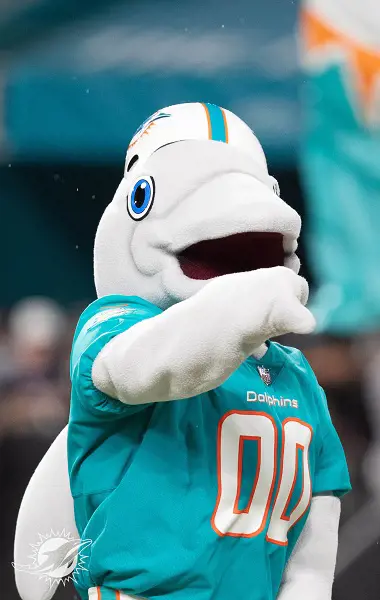
T. D. is the acronym for The Dolphin. The Miami Dolphins got the name from an online contest where 528 names were suggested.
It is the first one to attend a Hall of Fame Game. It participated in the 2001 event at Canton, Ohio, where the St. Louis Rams defeated the Dolphins 17-10.
The Dolphin's first game was in 1997. Since then, it has been to eight Pro Bowl games.
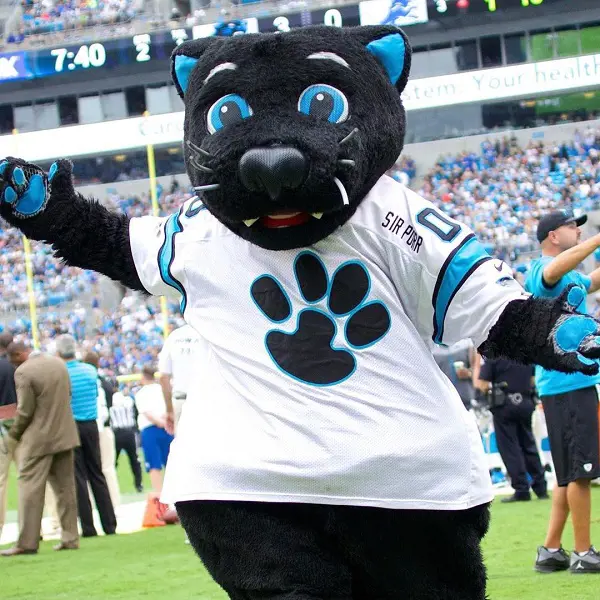
Sir Purr is an anthropomorphized panther who appears t all Carolina Panthers home fixtures at the Bank of America Stadium.
It sports jersey number 00 and dresses according to the occasion. Over the years, it has sported camouflage military apparel, a Santa Claus outfit, and Fred Flintstone Halloween clothing.
His family members, including Sir Purr Jr., and Mini Meow, also join him on several events.
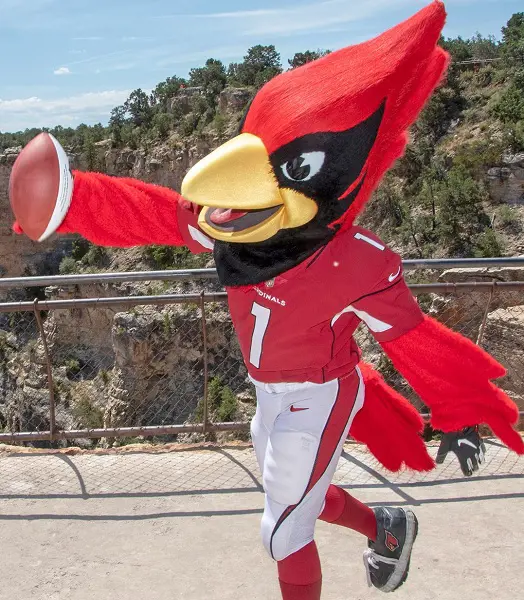
Big Red has represented the Arizona Cardinals in four Pro Bowls. As its name suggests, it is a big red bird resembling a Cardinalidae. The bright red fur, big yellow beak, and red tail make it a center of attraction, just like it prefers to be.
Per its official page, it hatched on the 4th of October, 1998. Big Red lists defeating the 49ers, Rams, and Seahawks as its hobby.
The Cardinals mascot also appeared in the Super Bowl XLIII in 2009. They lost to the Pittsburgh Steelers by 27-23.
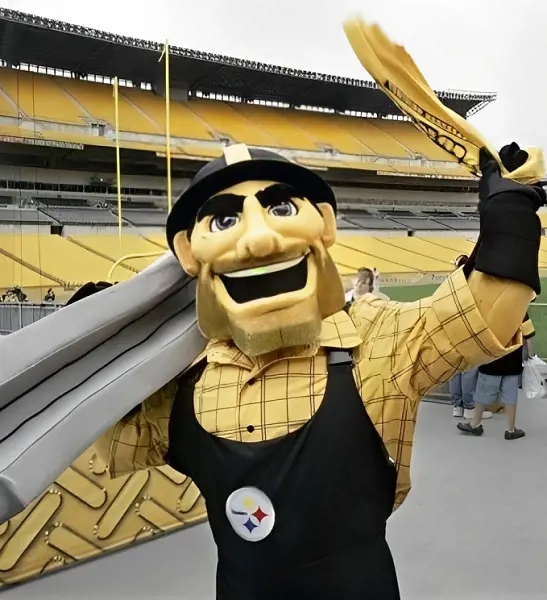
Steely McBeam has a friendly face and resembles former coach Bill Cowher. The jutting jaw gives away the notion.
The black-and-gold dressed Pittsburgh Steelers mascot carries a large steel beam with him. His name was chosen from an online contest in 2007. Diane Roles was the winner.
McBeam made his debut against the Buffalo Bills on September 16, 2007.
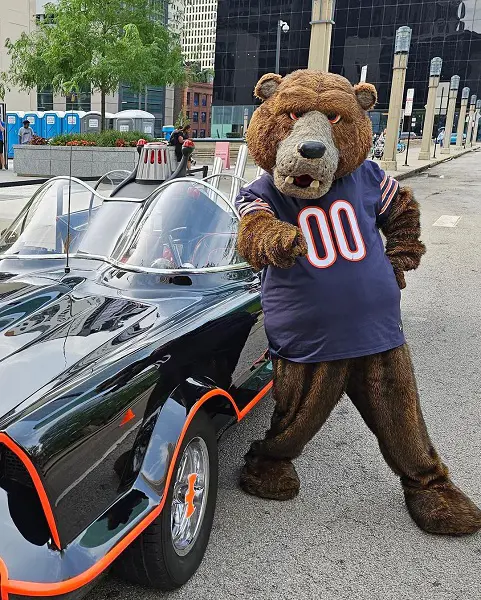
The Chicago Bears' anthropomorphic bear was named after A. E. Staley, the founder of the franchise.
Staley Da Bear debuted in 2003 at Soldier Field and became a three-time Pro Bowl mascot in its twenty-year history. He has traveled and performed in the UK, Hong Kong, Canada, Alaska, Marshall Island, Hawaii, and Guam.
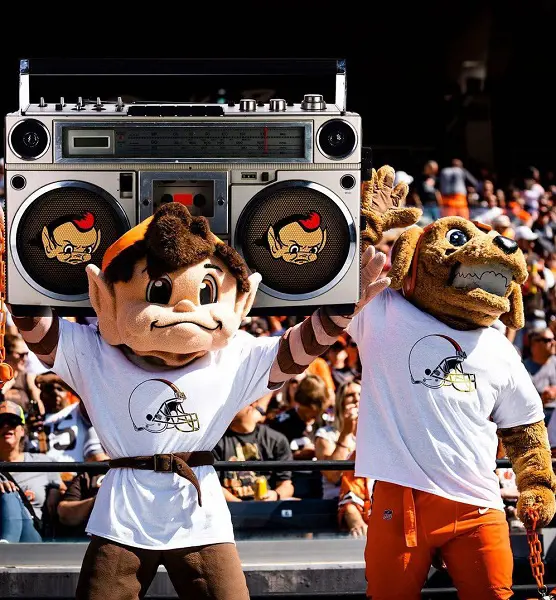
Cleveland Browns are the only NFL team with three mascots.
Brownie the Elf has been its primary mascot since the team was named Cleveland Browns in 1946. The original owner Mickey McBride, took inspiration from English folklore where Brownies (elves) were believed to exist.
Similarly, Chomps is a labrador-breed dog-like figure that was introduced as a tribute to the Dawg Pound section at FirstEnergy Stadium.
Swagger Jr. is a real-life bull mastiff who has been the third Browns mascot since 2019.
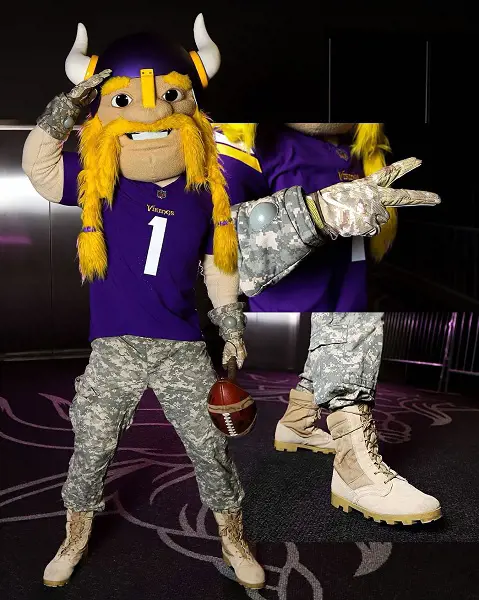
Viktor has a like-to-like resemblance to the Vikings from the Minnesota Vikings logo. The mascot wears a purple helmet with white horns and has thick yellow eyebrows, a long mustache, and hair.
The smiling viking wears the No. 1 uniform and appears in all the home games.
According to its fictional background, Viktor the Viking withstood Odin's fury and was frozen at the bottom of Lake Superior by Thor. He came back to life in 2007 when he heard of purple-clad Vikings who battled every Sunday.
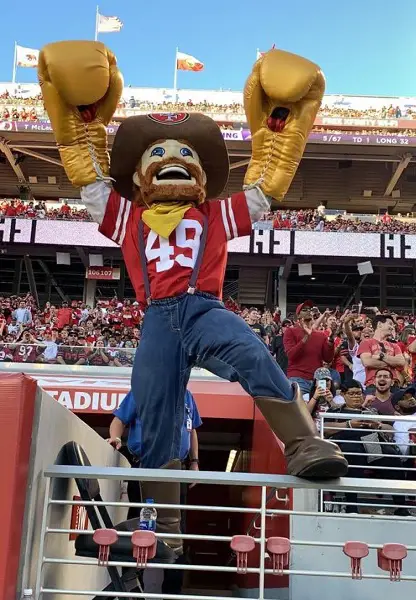
The 49ers had Clementine during the 1950s and 1960s. Sourdough Sam succeded the mule and made his first appearance in the 1970s.
He was first introduced as a gold rush prospector and was later changed to a miner. Unlike other mascots who appear in 0, 00, or 1 numbered jersey, Sam wears jersey No. 49.
He has a bearded look, blue eyes, and a cowboy hat.
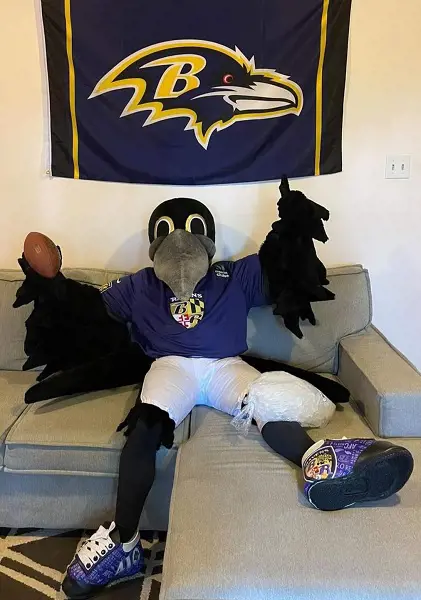
Baltimore Ravens named Poe after the poet and author Edgar Allan Poe, who lived most of his life in Baltimore, Maryland. Interestingly, the franchise was named after Poe's poem 'The Raven.'
When Baltimore first revealed the mascot, there were three raven brothers: Edgar, Allen, and Poe. They were named in honor of the author whom we mentioned above.
Poe is the youngest of the lot and is a ten-time Pro Bowler Mascot. Edgar and Allen retired in 2008. They came out of retirement in 2022 when Poe suffered an injury.
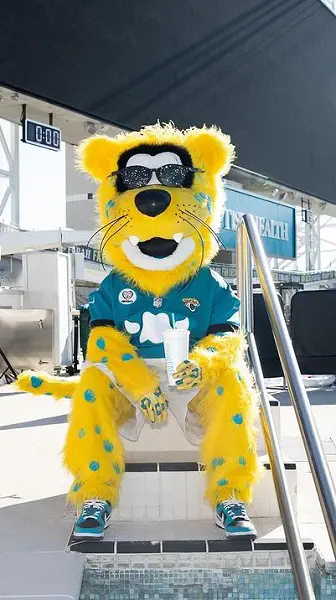
The yellow humanoid jaguar with teal patches appeared for his first NFL game on August 18, 1996. Curtis Dvorak carried out his duty under the suit for twenty years.
Jax is a cool figure who puts on his sunglasses and carries the team jersey with full swagger.
He is known for taking risks. He is not afraid of bungee jumping and ziplining from the TIAA Bank Field light fixtures. In one incident, he was stuck on the zipline for three minutes.
Also, he is the only mascot to jump from Wembley and Tottenham Stadium roofs.
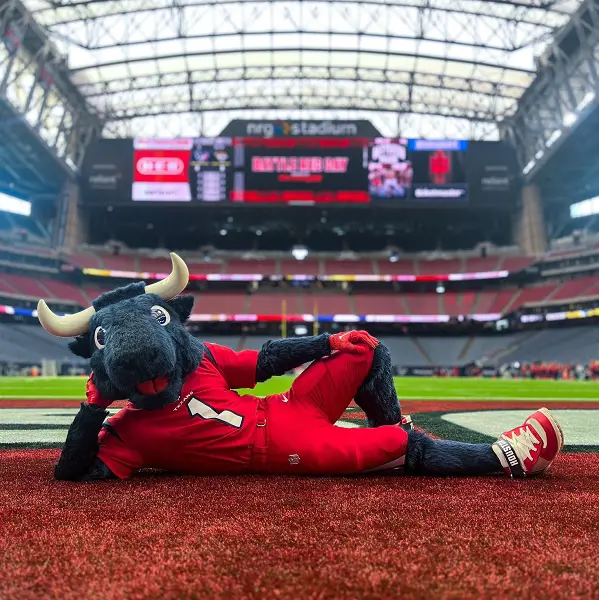
Toro has been with the Houston Texans since their inaugural NFL season in 2001.
The human-like blue bull is a ten-time NFL Pro Bowl mascot. It was voted the 2021 NFL Mascot of the Year.
Likewise, it holds the record for most traveled by rope in a single season (1,346 yards). The highflying stunts done during the home games earned his the NFL Mascot Stunt of the Year awards in 2016 and 2022.
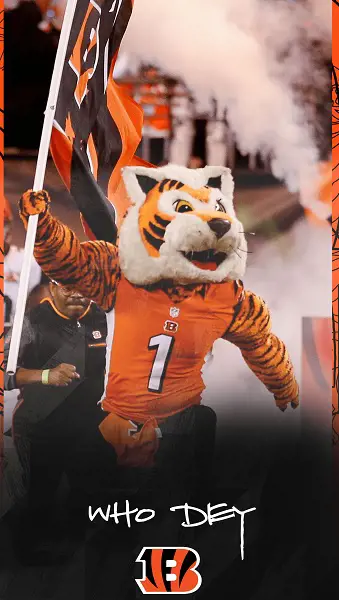
Who Dey made its first appearance in the 1993-94 season. Before that, the Cincinnati Bengals used a live tiger cub in the later 60s and various customed tigers during the early 1970s as their mascot.
But, the inception of Who Dey is related to Hudepohl Beer Company who started the chant 'HuDey.' It was immensely popular in the 1981 season and transformed into the 'Who Dey?! Who Dey?! Who Dey think gonna beat them Bengals? Noooooobody!'
The enthusiastic fan base named after the famous chant are called the Who Dey Nation.
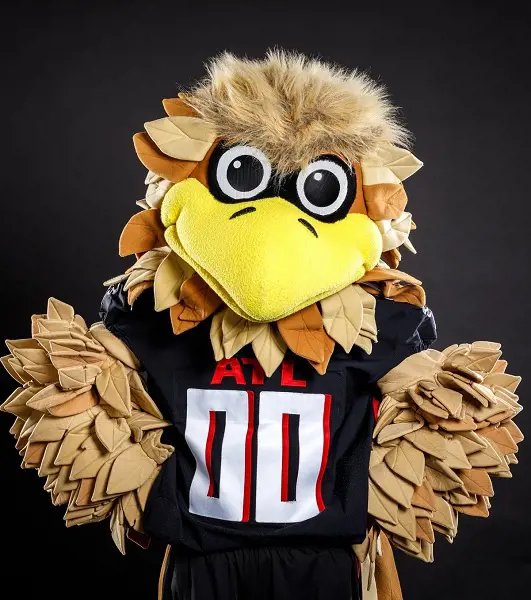
Freddie Falcon made the Atlanta Falcons proud by winning the 2017 NFL Mascot of the Year award. He also won the 2017 NFL Video of the Year.
With 20+ Pro Bowl selections and 17 USO tours, the big-eyed and thick-feathered bird is a resemblance to a falcon. It has been with the franchise for over 35 years.
During this period, he has been to two Super Bowls, opened two stadiums, and appeared in 1000+ school shows.
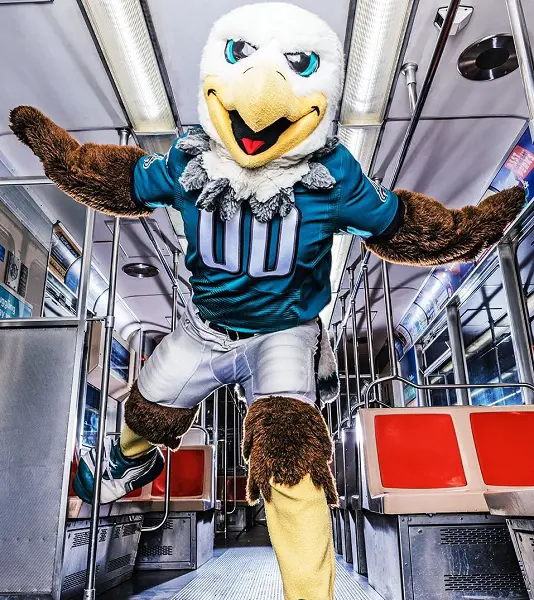
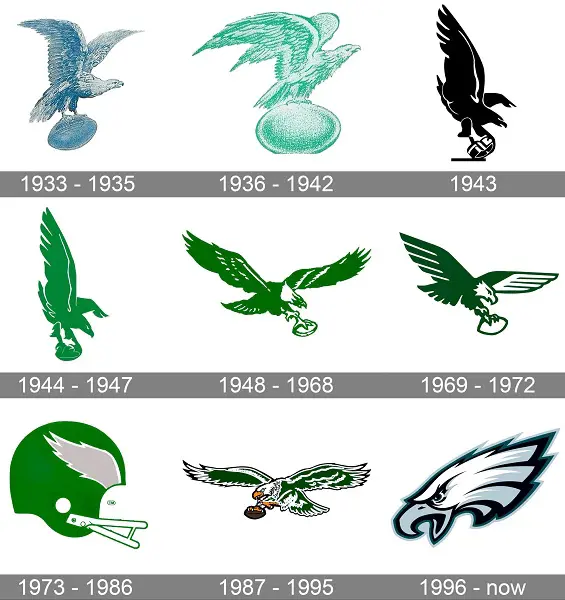
The Bald eagle dons a Philadelphia Eagles uniform and mentions South Philly, in the Eagles Nest high atop Lincoln Financial Field as his residence.
Swoop has been with the Eagles since 1995. According to its backstory, it had poor eyesight and was born with a weak heart. When an Eagles fan gave him the franchise's jersey, he morphed into a human-sized eagle.
From 2005 to 2010, he appeared in he Eagles Kids' Club as an animated character. He has also appeared in Ace Ventura: Pet Detective.
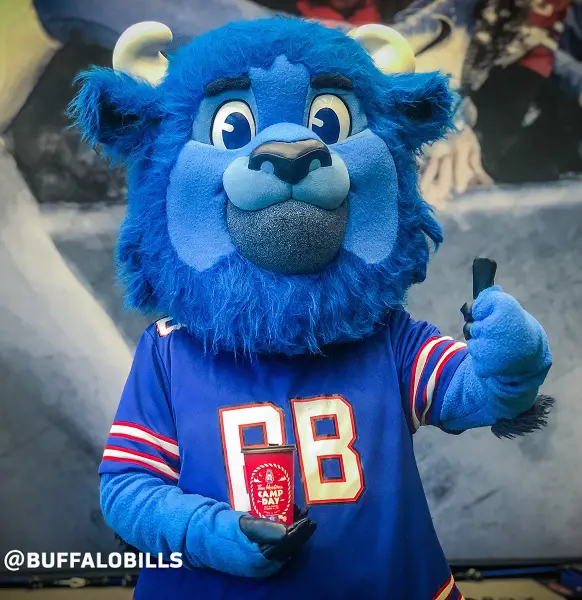
Billy Buffalo first appeared for the Buffalo Bills game in 200 at Orchard Park, New York. He is a blue American buffalo who wears the 'BB' initial printed jersey.
His fictional story portrays him as a wild buffalo who came to Buffalo, New York and felt drawn towards the city. The thundering at the stadium during a football match reminded him of home and hence, he became the Bills mascot.
On August 26, 2018, the mascot went through a transformation, giving it a facelift, and the hump was eliminated for good.
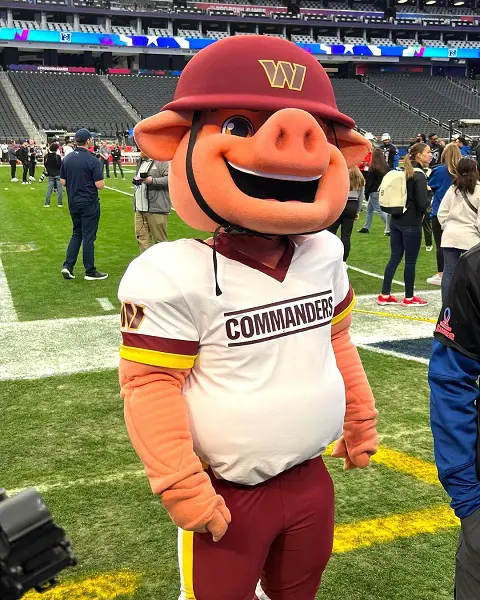
The Washington Commanders' cute hog appears with a maroon combat helmet and team uniform.
The anthropomorphic pig is a tribute to the famous Resskins offensive line of the 1980s and the early 1990s. They were known as 'The Hogs' and helped the team secure Super Bowls XVI, XXII, and XXVI.
Likewise, Tuddy is slang for touchdown.
Major Tuddy came with the rebranding of the team from Washington Football Team to Washington Commanders in 2022.
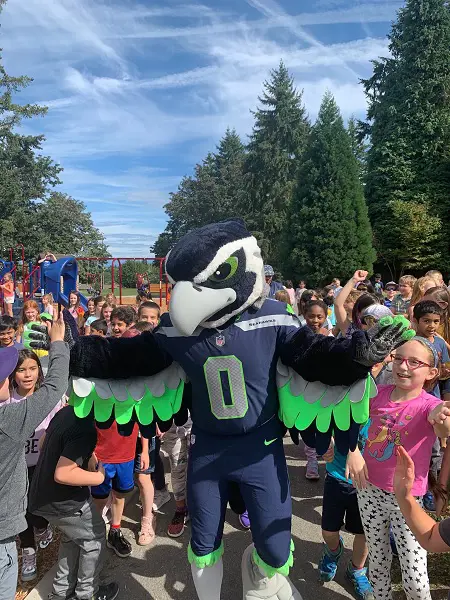
The official mascot of the Seattle Seahawks debuted at the Kingdome against the Arizona Cardinals on September 13, 1998. It had a big golden beal and was hairy.
With the change in logo colors and design, the makeover of the bird made the osprey a likable and attractive figure. It is a close resemblance to the Seahawks team logo.
Likewise, it also got its official sidekick in 2014 called Boom. It has green hair and eyes and wears a #00 jersey.