Quick Learn

Can You Review Pass Interference in College Football?

By Ashish Chamlagain / 23 November 2023 02:14 AM

( Source : twitter )

You cannot review pass interference in college football. The penalty can be reviewed in order to check if any player has touched the ball.

The foul is not applicable in CFB if the pass has been touched by any player prior to the foul as per the rule. That is a touching of a pass play which is now reviewable.

Although the CFB rules clearly define the pass interference as unexaminable, there is another way to dig it out i.e. taking the help of touching of a pass play.

In doing so, you will have a clear idea whether the foul exists or not. If the pass had been touched, it doesn't exist. If not that is a foul. There are two different categories of fouls according to the NCAA football rules.

On the defensive side, it is a contact beyond the neutral zone by a Team B player whose intent to impede an eligible opponent is obvious and could prevent the opponent the opportunity of receiving a catchable forward pass. It occurs only when a legal forward pass is thrown.

On the offensive part, it is a contact by a Team A player beyond the neutral zone that interferes with a Team B player during a legal forward pass play in which the forward pass crosses the neutral zone.

Is Pass Interference A Spot Foul In College?

College Football pass interference spot foul is present in the NCAA rulebook. The original version of the regulation was introduced in 1928.

DPI in CFB is however slightly different from that in NFL. In NCAA football it is still a spout foul but instead of yielding an automatic first-down advantage to the team in possession, the maximum penalty can go up to 15 yards.

The DPI calls are higher in NCAA Power Five conferences as compared to the National Football League. If we are to look at the graphs of the past, NCAA DPI fouls per 100 pass attempts were around 1.7. The same year it was 1.2 in the NFL.

Comparison Of DPI Calls in NCAA And NFL

In 2006, the number saw a little downfall and reached approximately 1.5 in CFB. The graph read still lesser number in NFL that year i.e. 1.1.

The stats for the Power Five conferences of college football were almost similar in 2007 while in the NFL it decreased and reached 0.9 approx. The graph rose up and exceeded the 1.7 mark next year in 2008 for the NCAA and the NFL also crawled up to 1.0.

The number in 2009 went down to 1.6 for the NCAA while NFL saw a small increase up to 1.2. The decreasing trend continued for CFB through 2010 and their graph for the year settled below 1.5. On the other hand, the NFL followed the increasing trend and reached around 1.4.
( Source : twitter )

The graph remained almost similar for the NFL while the NCAA saw a massive increment in numbers and their stats for 2011 went up above 1.7 in 2011.

9 years later in 2020, the DPI fouls per 100 attempts had already passed the 2.0 mark in the NCAA while the NFL was hovering around in around 1.9.

If we look at the DPI oul percentage it is still higher in CFB as compared to that of the National Football League. At the current time, the NCAA exceeds the NFL in DPI counts.

Reason For More DPIs In College Football

From the above data, it is clear that the interference of the pass foul calls is more in the NCAA in comparison with the National Football League.

One of the most possible reasons for this is a difference in the weight of punishment. In the NFL the punishment is immense as compared to CFB because of which the players commit fewer fouls.

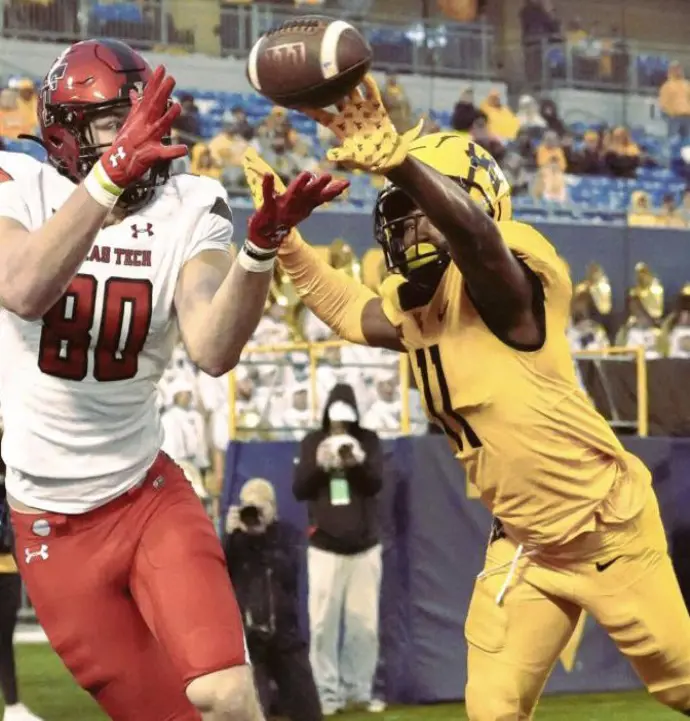
But the case is different in CFB. For instance, in a deep pass situation, an NCAA player can act aggressively to prevent a catch and give up fewer offensive gains in return even if the DPI is called.
College Football Pass Interference Rule End Zone

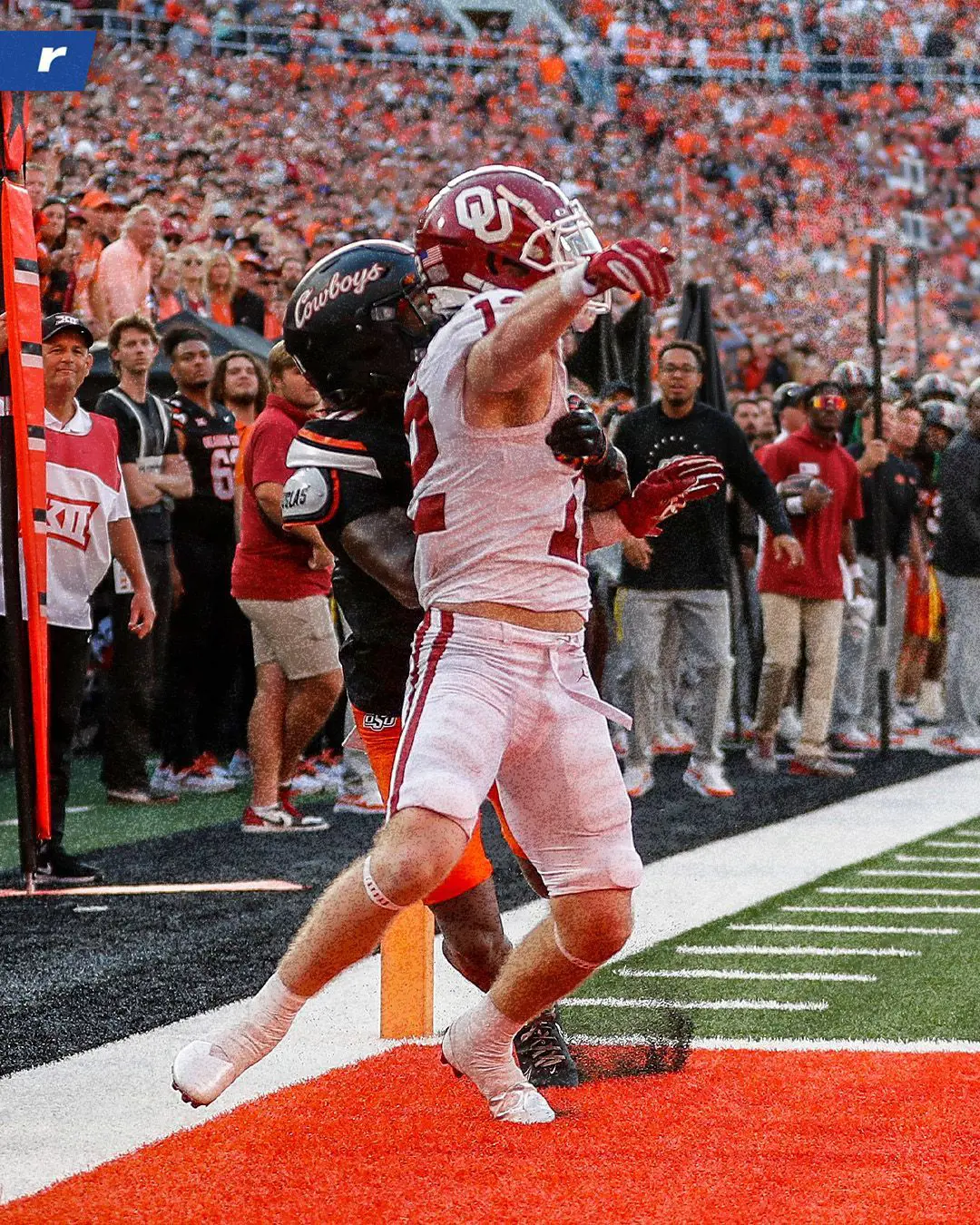
College Football Pass Interference End Zone rule states that the ball will be placed on the 2-yard line if the foul occurs in the end zone.

While in the NFL rule, the ball will be kept on the 1-yard line. Although the rules seem almost similar, the penalties are different in both the CFB and the NFL.

In the NCAA, it becomes a spot foul up to 15 yards. The rulebook in the section on penalties read that team A’s ball at the spot of the foul and first down if the foul occurs fewer than 15 yards beyond the previous spot.

If it occurs 15 or more yards beyond the previous spot, Team A’s ball, first down, 15 yards from the previous spot, and when the ball is snapped on or inside the Team B 17-yard line and outside the Team B two-yard line the penalty from the previous spot shall place the ball at the two-yard line, first down.

The case is similar to the above if the spot of the foul is on or inside the two-yard line.

( Source : instagram )

Conditions For Not Calling A PI

There are several cases in which the PIs will not be called. The conditions are listed below:

  • Whenever an opposing player establishes contact with the opponent at a point that is one yard beyond the neutral zone after charging immediately.
  • Whenever two eligible players are making simultaneous attempts In order to reach, catch, or bat the pass then the DPI will not be called as both players have equal right on the ball.
  • Whenever a legal contact is made by a Team B player to an opponent before throwing a pass.
  • On the offense side, whenever the pass is in the air and an offensive player impedes an opponent making the catch impossible when two or more eligible players are in the area to catch or intercept the ball the foul will not be called.

According to the rulebook, it always doesn't have to be called a PI. The statement explains that if a contact is made by Team B with an eligible receiver involving a personal foul that interferes with the reception of a catchable pass then it shouldn't always have to be addressed as an interference of the pass.

It may be ruled either as PI or as a personal foul with the 15-yard penalty enforced from the previous spot.

Can You Challenge Pass Interference NFL?

NFL pass interference challenge rule is no longer in use in the League. It was just a one-year experimental tryout introduced in 2019.

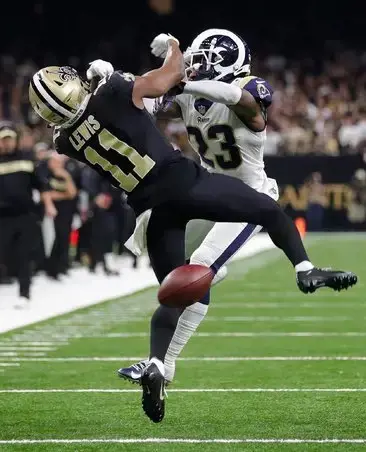
Actually, the one-season experiment of the review rule was the product of the missed call in the 2018 NFC Championship games which snatched the win from the clutch of the New Orleans Saints.

( Source : twitter )

The officials couldn't call the PI in that game which left the losing team devasted. As a result of that immense pressure built up in the league and they had to do something to lessen it.

In order to avoid those mistakes in the future, the League decided to run a one-season experiment on the replay review for the OPI and DPI.

During the season the OPIs and DPIs were subject to NFL replay review but it couldn't contribute much in monitoring the missed call that year.

Later when the officials sat to discuss necessary changes to be made in the rules, it didn't receive any vote. In fact, nobody even bothered to table it further.

As a result, the OPI and DPI review died a natural death in the words of Rich McKay, the president of the Falcons.

Reasons For OPI/DPI Review Rule Failure

Once the rule was officially taken off from the rulebook, people's views on it were divided into two different poles. Experts thought it was because of the subjectivity issues.

Some people believe that it was doomed to flawed logic while others emphasized that the League could have learned how to use it properly instead of abandoning it.

The League committee member gave their opinion and called the PI as totally a subjective play ad it's difficult to review such subjective plays. The way we perceive and view the subjective part is different according to the person. So, the decision made on that basis is never objective.

NFL Pass Interference Rule Change History

NFL Pass Interference rule was first written in 1910. It stated that no player from either of the sides was allowed to interfere until he had caught the pass.

Originally, the rule said that the first person to touch the forward pass has every right to obtain the ball into his possession without being tackled by anyone until he actually does possess the ball.

The rule is almost intact as it was other than a little tweak which allows contact by an opponent to the potential receiver even if he has merely touched the ball.

The offensive rules were also addressed in the same year which were the basis of the regulations prevalent today. The rule declared it illegal for an offensive player to make any contact during a passing play.

( Source : twitter )

It was again revised in 1922 when the penalty for the foul was increased to 15 yards from the previously existing loss of down.

In 1923 again, the league made a rule that said that team A couldn't hinder the play once the sanap was made. If done so it would be considered illegal.

The year 1974 saw some changes again when the League totally controlled and restricted the defender's contact with the potential offensive receiver.

In 1978 the defenders were permitted to make contact with the potential receiver but within the 5-yard line of scrimmage and actually enforced the illegal contact policy.

The year of 1995 allowed the receivers to come inbound and make the play who was forced out of bounds. As for now, the rule remains as it is.

Related post of Quick Learn